


Why Is My Cat Vomiting? Understanding the Ick
- Natalie Moore

- Feb 5
- 3 min read
Overview
You hear that distinct, rhythmic "hacking" sound reverberating through the hallway at three in the morning. Every cat owner has experienced the sensation of jumping out of bed in the hopes of making it to the hardwood floor before their feline companion reaches the pricey rug.
Many cat owners believe that vomiting is simply "part of having a cat" because it happens so frequently. Vomiting isn't always "normal," despite cats' well-known sensitive stomachs and grooming habits. Sometimes it's just a hairball, and other times it's an internal system cry for assistance.
The most frequent causes of your cat's vomiting will be discussed in this guide, along with—and perhaps most importantly—how to distinguish between a minor discomfort and a medical emergency.

1. Trichobezoars, the renowned hairball
The hairball is the most frequent offender. Cats are meticulous groomers, and their tongues, which resemble sandpaper, are made to collect loose fur. Some of that fur remains in the stomach and clumps there, but the majority of it travels through the digestive system.
A hairball is a mass of fur in the mess that resembles a cylinder. Frequent hairballs could indicate that your cat is overgrooming because of stress or skin allergies, but sporadic ones (once or twice a month) are normal.
2. The "Scarf and Barf" Situation
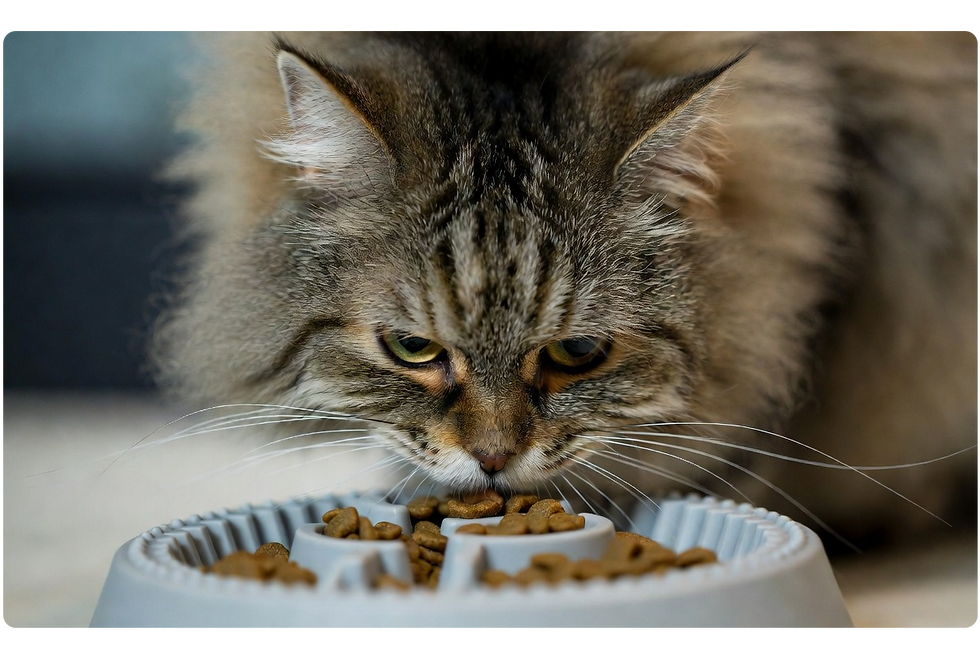
Every time you fill the bowl, does your cat act as though they haven't eaten in ten years? A lot of cats eat too fast, ingesting unchewed kibble and extra air. The food is immediately brought back up by a reflex when the stomach grows too quickly.
Your cat is a "scarfer" if the vomit resembles the dry, undigested kibble you just put in the bowl. This issue can frequently be resolved overnight by spreading the food out on a flat plate or using a slow-feeder bowl.
3. Toxins and Dietary Indiscretion
Cats are inquisitive animals. They occasionally chew on objects they shouldn't, such as a piece of string, a rubber band, or a houseplant leaf.
Caution: A lot of common household plants, such as lilies, are highly toxic to cats and can quickly cause renal failure. Call your veterinarian right away if you see a chewed plant nearby and your cat is throwing up. In a similar vein, "people food" like chocolate, onions, or garlic can be extremely toxic and upset the stomach.
4. Underlying Health Issues
Vomiting may be a sign of something more serious if it is chronic, meaning it occurs often over an extended period of time. Frequent vomiting in older cats is frequently a warning sign for:
One of the most prevalent conditions affecting elderly cats is chronic kidney disease (CKD).
Hyperthyroidism: An overactive thyroid can increase metabolism and induce nausea.
Inflammatory Bowel Disease (IBD): Prolonged intestinal inflammation.
A sensitivity to a particular protein in food is known as a food allergy.

When Is the Right Time to Call the Vet?
Although one episode of vomiting followed by normal behavior is typically not reason for alarm, be aware of these warning signs:
Frequency: throwing up more than once or twice in a 24-hour period.
Lethargy: Your feline is hiding or appears unusually exhausted.
Blood: Vomit with red or "coffee ground" particles.
Projectile vomiting is the term for violent vomiting that spreads over a large area.
Refusing to eat for longer than 12 to 24 hours is known as inappetence.
Finally, listen to the "Meow"
A sensitive indicator of your cat's health is their stomach. The best thing a pet parent can do is to remain vigilant, even though we may make jokes about the "hairball alarm" in the middle of the night. A happier, healthier cat will result from addressing the "why" behind the vomit, whether that means scheduling a check-up for an elderly cat or switching to a slow-feeder.
Are you dealing with hairballs all the time, or does your cat have a "scarf and barf" habit? Leave a comment below with your experiences and advice!


Comments